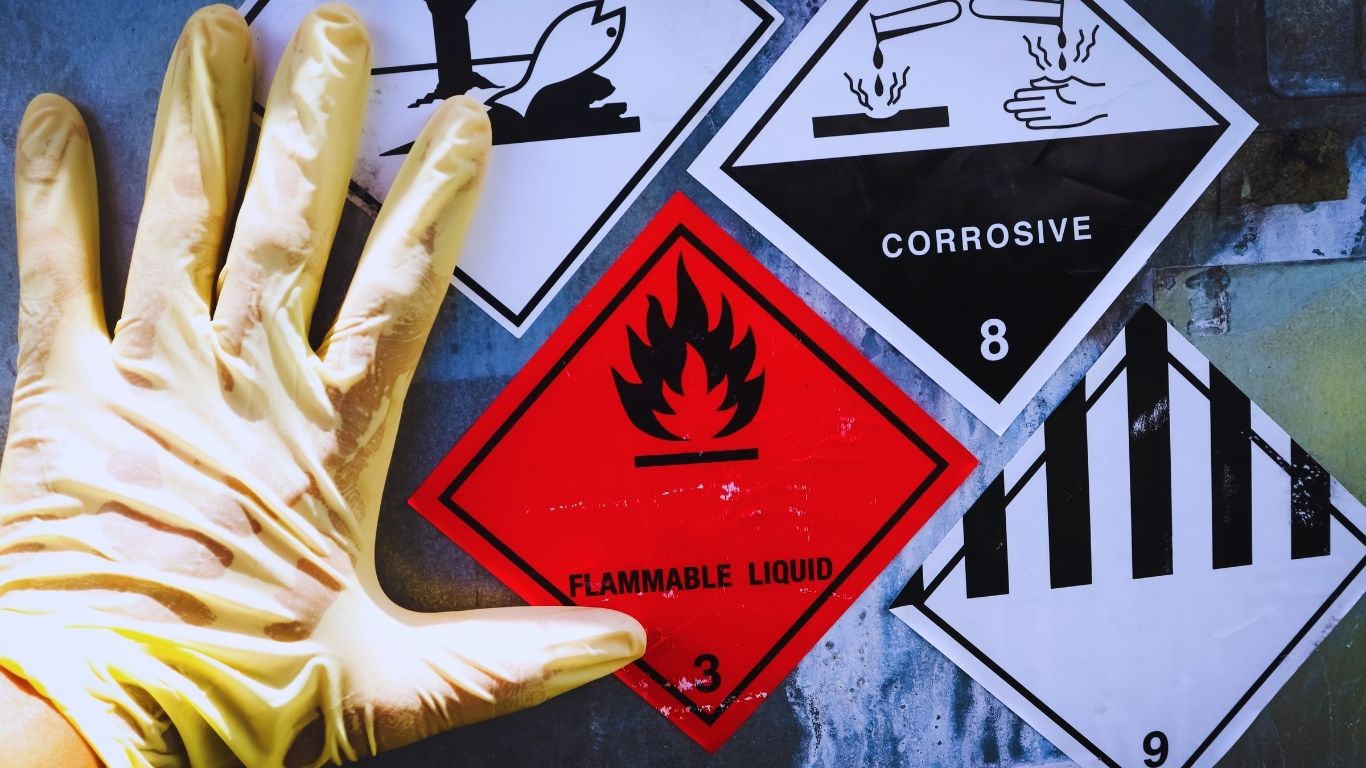

A workplace chemical burn may entitle you to workers’ compensation and, in some cases, a separate lawsuit. Chemical burns happen when corrosive substances like acids, bases, or cleaning agents contact the skin or eyes. Occupational Safety and Health Administration (OSHA) requires employers to warn workers about hazards with labels, safety data sheets, and training.
What Causes Chemical Burns in the Workplace?
Chemical burns happen when your skin, eyes, or lungs come into contact with a harmful substance. Unlike heat burns, chemical burns hurt you until you fully remove the chemical. In our 25 years of experience, we’ve handled workplace injury claims with these common causes:
- Acids, often found in batteries, cleaners, and manufacturing
- Bases (alkalis), like bleach, lye, and drain cleaners, which often cause deeper burns than acids
- Solvents and other corrosives used in labs, factories, and construction
If you work in manufacturing, agriculture, healthcare, or construction, you face the highest risks. A splash, spill, or leak could hurt you in seconds.
Can You Get Workers’ Comp for a Workplace Chemical Exposure Injury?
After suffering a chemical burn at work, you can apply for workers’ compensation. Workers’ comp is a no-fault system, so you don’t need to prove your employer is responsible. Workers’ compensation generally pays for:
- Medical treatment, including surgery and long-term care
- A portion of your lost wages
- Disability benefits if you cannot return to work
But in exchange for these guaranteed benefits, workers’ comp is your only claim against your employer. Workers’ compensation also doesn’t pay for pain and suffering. Our workers’ compensation attorneys can help you file.
If you are unsure whether to get help, our guide on whether you need a workers’ comp lawyer explains when it matters most.
Eligibility Requirements for Third-Party Lawsuits
Were you injured by someone else, but not your employer? You may be able to file a lawsuit and collect workers’ comp at the same time. A “third party” could be any of the following:
- The maker of a chemical that lacked proper safety warnings
- A manufacturer of defective safety equipment, like a faulty respirator or gloves
- A contractor or another company at your worksite
Unlike workers’ comp, a third-party lawsuit can pay for pain and suffering and full lost wages. This is often the difference between a small recovery and a full one, especially for a severe burn injury. Our guide on whether you can sue your employer after a work injury explains your options.
Workers’ comp covers your basic losses no matter who was at fault. A third-party claim can add compensation that workers’ comp does not provide.
How OSHA Standards May Affect Your Case
Established in 1971, the Occupational Safety and Health Administration (OSHA) sets safety rules for employers and chemical makers. If your employer breaks one of these rules, then that violation may strengthen your case.
Key OSHA Protections
OSHA’s Hazard Communication Standard (29 CFR 1910.1200) is especially important. Employers must label chemicals, keep safety data sheets, and train workers on the dangers. Also, OSHA requires employers to maintain eyewash stations and showers, especially where corrosive chemicals are used.
Federal law doesn’t allow you to sue a company directly “under OSHA”. But an OSHA violation, like a missing warning label, may be strong evidence of negligence in a third-party lawsuit.
Common Questions About Chemical Burns at Work
Can I get workers’ comp for a chemical burn at work?
Yes, workers’ compensation generally covers a chemical burn at work, regardless of who was at fault. Benefits include medical care, part of your lost wages, and potential disability payments. Workers’ comp doesn’t require proving employer negligence. However, it also does not pay for pain and suffering, which a lawsuit may cover.
Can I sue my employer for a chemical burn at work?
In most states, workers’ compensation is a remedy against employers, so you generally can’t sue them for negligence. Narrow exceptions exist, such as an employer intentionally causing harm or failing to carry required insurance. However, you may be able to sue a third party, like a chemical manufacturer, who helped cause your injury.
What is a third-party claim for a workplace chemical burn?
A third-party claim is a lawsuit against someone other than your employer. This person contributed to your workplace chemical burn. Common examples include a chemical manufacturer that failed to provide proper warnings or the maker of defective safety gear. Under laws like Alabama Code § 25-5-11, you can pursue this claim while still receiving workers’ compensation benefits.
Does OSHA cover chemical burns at work?
OSHA sets safety standards, but it doesn’t pay injured workers. Instead, it outlines regulations that employers must follow. For example, under the Hazard Communication Standard (29 CFR 1910.1200), employers must label chemicals and train workers. An OSHA violation can be evidence of negligence in a lawsuit.
What should I do after a chemical burn in the workplace?
First, you must flush the area with water and get medical care immediately. Report the injury to your employer as soon as possible, since delays can affect your claim. Keep records of the chemical involved, its safety data sheet, and your treatment. Then consider speaking with an attorney about workers’ comp and any third-party claim.
How long do I have to file a chemical burn at work lawsuit?
Deadlines vary by claim type and state. For example, in Alabama, workers’ comp claims generally must be filed within two years. Missing a deadline can bar your claim. Because chemical burn cases can involve both types of claims, acting quickly protects all your options.
Trust Alexander Shunnarah Trial Attorneys Today
A serious chemical burn can mean surgeries, lasting scars, and time away from work. You may be owed more than workers’ comp alone provides. Our firm knows how to pursue every source of recovery, from workers’ comp to third-party claims. Schedule a free case review today.
Reviewed by Alexander Shunnarah, Attorney and Chief Executive Officer at Alexander Shunnarah Trial Attorneys, on 2026-09-08.