
Construction vehicle accidents can involve dump trucks, cement mixers, cranes, and other heavy equipment operating on public roads or at job sites. According to the Federal Highway Administration, thousands of work zone crashes occur each year across the United States. A construction vehicle accident case involves complex liability questions and multiple potentially responsible parties.
What Types of Construction Vehicles Cause Accidents?
Construction vehicles vary widely in size, purpose, and design. Each type of construction vehicle has certain risks. The most common vehicles reported in construction truck accidents are listed below.
- Dump trucks haul soil, gravel, and debris. They’re common in road construction and demolition.
- Cement mixers and concrete trucks deliver concrete to job sites. Unfortunately, these heavy vehicles are hard for drivers to stop quickly.
- Cranes lift and transport heavy loads. Tip-overs and dropped loads cause serious injuries.
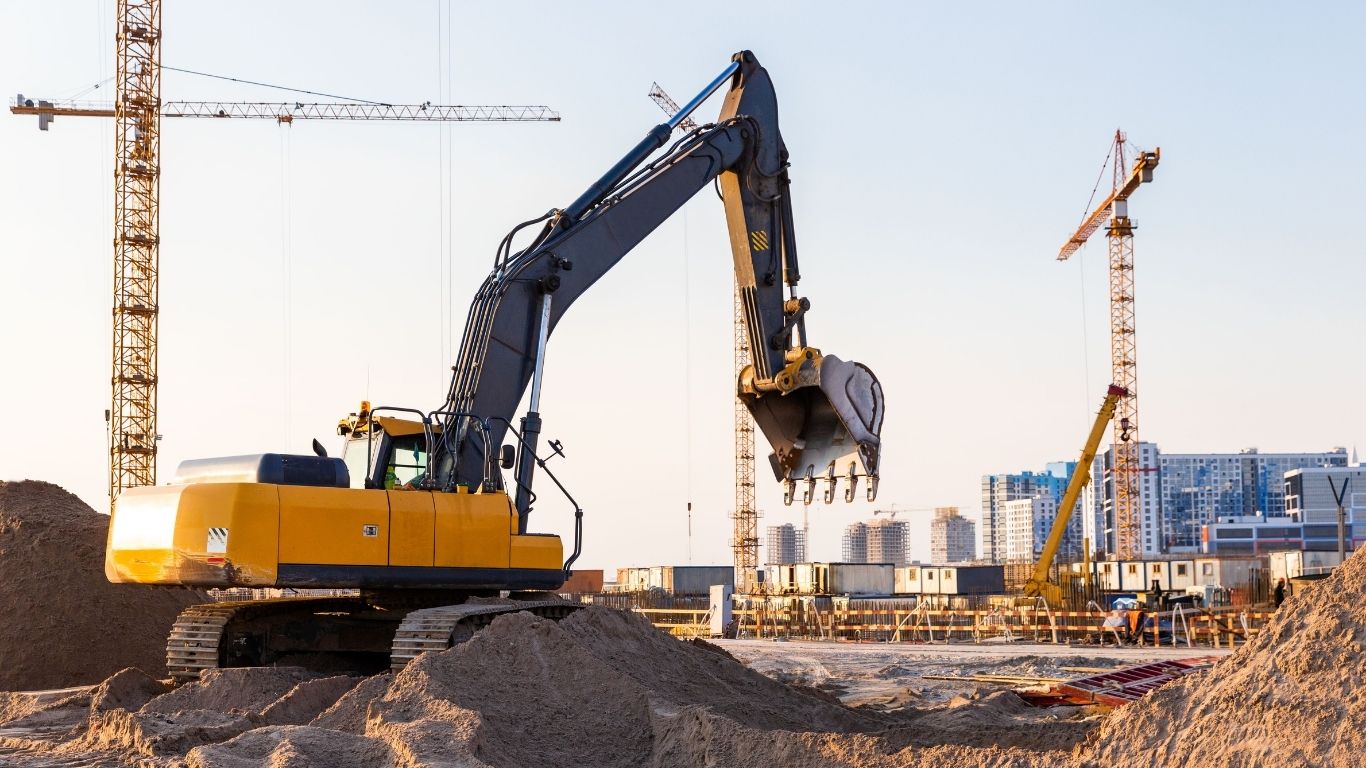
- Excavators and backhoes dig and move earth. Backing accidents are a major cause of worker deaths.
- Bulldozers push earth and materials. Large blind spots create pedestrian risks.
- Skid steers and loaders are small but powerful. They’re involved in many crush injuries.
- Forklifts move materials at sites. Common in both construction and warehouse settings.
- Road graders and rollers level and compact roads. Involved in worker and driver crashes.
Different vehicles have different operator requirements, maintenance rules, and safety standards. For example, commercial construction vehicles over 10,000 pounds are subject to Federal Motor Carrier Safety Administration rules. In comparison, smaller equipment falls under state and OSHA rules.
Our commercial vehicle accident team handles cases involving all types of construction vehicles. After an accident, you should meet with one of attorneys as soon as possible.
Who Is Liable in a Construction Vehicle Accident?
Construction zone accident liability can be hard to determine. At Alexander Shunnarah Trial Attorneys, we’ve fought many cases where different parties were responsible for one accident.
| Potentially Responsible Party | When They May Be Liable |
|---|---|
| Vehicle operator | Negligent driving, distraction, fatigue, or improper training |
| Construction company | Negligent hiring, poor training, unsafe policies, or scheduling pressure |
| General contractor | Failure to enforce site safety standards |
| Subcontractors | For their own workers, equipment, or unsafe practices |
| Equipment manufacturer | Defective design, brakes, safety systems, or backup alarms |
| Maintenance company | Failure to inspect or repair equipment properly |
| Government agency | Poor road design, signage failures, or unsafe work zone setup |
| Property owner | For unsafe conditions on private construction sites |
Construction accidents often involve overlapping causes. For example, an operator may have lacked training, or the truck’s maintenance was skipped. In an accident, every factor affects responsibility.
Are you interested in learning more about how commercial cases differ from ordinary car crashes? Read our article on how personal and commercial vehicle accident claims differ.
How Construction Zone Accidents Are Different From Other Wrecks
Construction zones, or work zones, create unique legal issues. For example, a single work zone crash may involve the contractor, government agencies, other drivers, and equipment manufacturers. But other elements make construction zone accidents different from other collisions.
Higher Risk of Crashes
Work zones combine slow-moving equipment, changing traffic patterns, distracted drivers, and unpredictable conditions. The Federal Highway Administration reports that work zones account for a significant share of highway injury crashes each year.
Special Rules for Drivers
Most states impose higher penalties for driving violations in work zones, including speeding and injuring workers. These enhanced penalties reflect the special risks.
Contractor Liability
Contractors must follow specific traffic control standards under the Manual on Uniform Traffic Control Devices (MUTCD). If they failed to place proper signs, cones, or flaggers, they could share responsibility for an accident.
Government Liability
State or local agencies may be liable for road design failures, unsafe detours, or inadequate warnings.
Government claims for construction zone injuries often require written notice within 6 months to 1 year. If you miss a filing deadline, you may lose your right to file a claim entirely.
Driver Liability
Other drivers who speed, tailgate, or drive distracted through work zones may share responsibility in a construction vehicle accident.
What Compensation Can You Recover?
Injured victims of construction vehicle crashes may recover several types of damages. In personal injury law, damages may be economic, non-economic, or punitive. If a loved one passed away, you may even be able to recover wrongful death damages.
| Damage Type | What It Covers | Examples |
|---|---|---|
| Economic damages | Real, out-of-pocket losses | Medical expenses (past and future) Lost wages and lost earning capacity Rehabilitation and long-term care costs Property damage Home modifications for permanent disabilities |
| Non-economic damages | Losses without a specific dollar value | Pain and suffering or emotional distress Permanent scarring or disfigurement Loss of consortium |
| Punitive damages | Penalties for grossly negligent, reckless, or intentional conduct | Failing to follow OSHA or MUTCD standards can support punitive claims in some cases |
| Wrongful death damages | Recoverable by surviving family members after a fatal construction crash | Funeral expenses Lost financial support Loss of companionship |
Workers vs. Non-Workers
When hit by their employer’s equipment, injured construction workers are usually limited to workers’ compensation. But they may still have third-party claims against other contractors, equipment manufacturers, or negligent drivers. For details on truck-specific cases, see our article on how to file a truck accident lawsuit.
Frequently Asked Questions About Construction Accidents
Who is liable in a construction vehicle accident?
It depends on the facts of your case, but many different parties could be held responsible. This may include the vehicle operator, construction company, or general contractor. Subcontractors, equipment manufacturers, government agencies, and property owners may also bear responsibility. A single crash often involves several overlapping causes, and, as a result, multiple liable parties.
What should I do after being hit by a construction vehicle?
First, get medical care immediately. Then, you should report the accident to the police and the property owner or contractor. Take photos of the scene and any injuries. Get contact information from workers and witnesses.
One of the most important things you can do, though, is to quickly contact an experienced attorney. They can help you preserve evidence and identify liable parties.
Can I sue the government for a construction zone crash?
Yes, but special rules may apply to your case. Government agencies have some protection under sovereign immunity. Most states require written notice of a claim within 6 months to 1 year. Damage caps may also limit recovery.
What if I were a worker hit by construction equipment?
Workers hit by their own employer’s equipment are usually limited to workers’ compensation against the employer. However, third-party claims may exist against other contractors, subcontractors, equipment manufacturers, or negligent drivers. These third-party claims can recover damages beyond workers’ compensation limits.
How long do I have to file a claim after a construction vehicle accident?
Deadlines vary by state and can range from 1 to 6 years for personal injury claims. Government claims often require notice within 6 months to 1 year. However, workers’ compensation claims have separate, shorter deadlines. Missing any applicable deadline usually bars the claim entirely.
Are construction companies required to have insurance?
Yes. Construction companies must carry liability insurance, workers’ compensation insurance, and often commercial auto insurance covering their vehicles. For example, large construction projects may involve layered insurance policies from multiple contractors, subcontractors, and property owners.
Trust Alexander Shunnarah Trial Attorneys Today
Construction vehicle cases involve overlapping liability, strict deadlines, and multiple defendants. Our trial team handles commercial vehicle and construction accident cases nationwide. Schedule a free case review today.
Reviewed by Alexander Shunnarah, Attorney and Chief Executive Officer at Alexander Shunnarah Trial Attorneys on 2026-07-09.