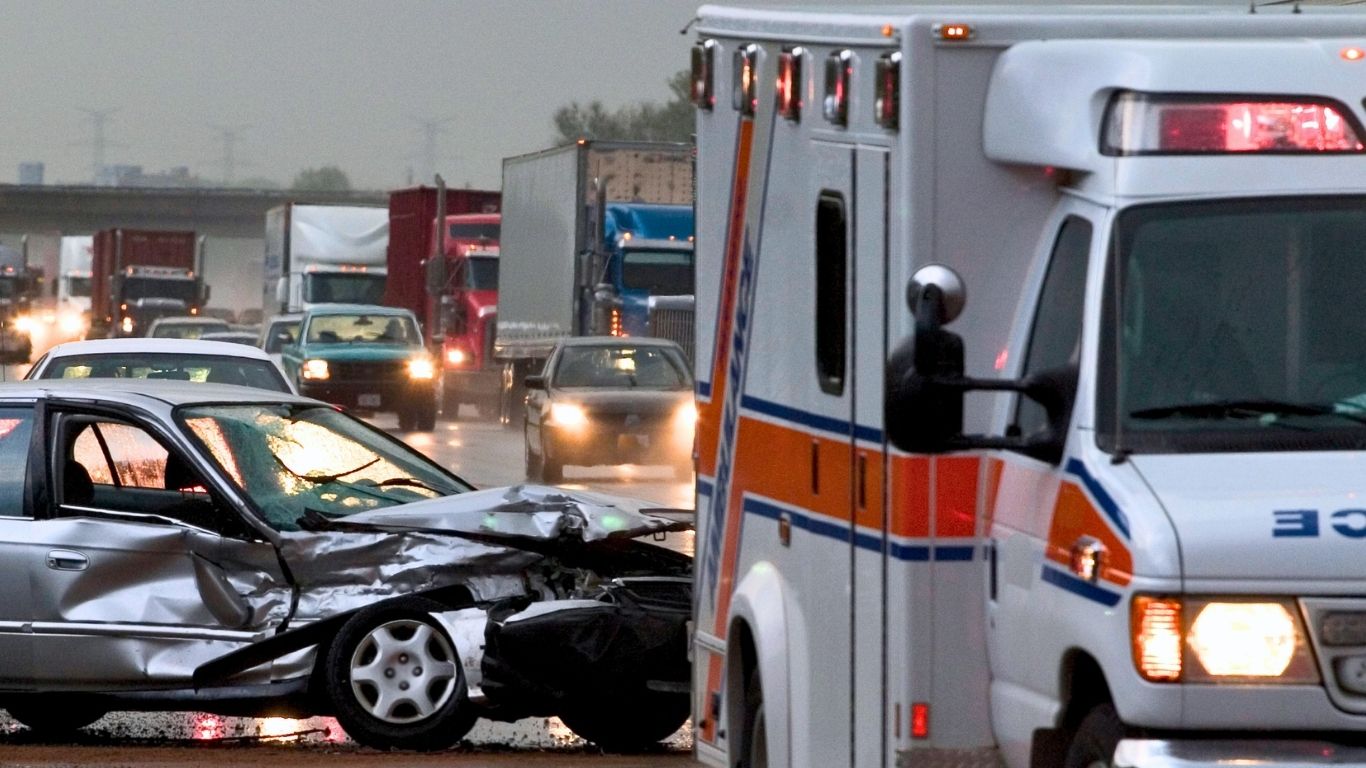

In Alabama, leaving the scene of an accident that causes injury or death is a Class C felony, punishable by up to 10 years in prison. According to the AAA Foundation for Traffic Safety, an estimated 700,000 hit-and-run crashes happen in the U.S. per year. If you’re the survivor of a hit-and-run accident, you have legal options in a civil claim.
Is a Hit-and-Run a Felony in Alabama?
The facts of the accident decide whether or not a hit-and-run is a felony. Alabama law (Ala. Code § 32-10-1) requires every driver in an accident to take action. The driver is supposed to stop, share information, and help anyone who is hurt.
However, leaving the scene breaks that law. Then, the potential damage determines the severity of the claim. For example, if only property is damaged in the accident, then fleeing the scene is a misdemeanor. Basically, the hit-and-run charges depend on the circumstances of the accident.
| Type of Crash | Charge | Penalty |
|---|---|---|
| Property damage only | Class A misdemeanor | Up to 1 year in jail, fine up to $6,000 |
| Injury or death | Class C felony | 1 year and 1 day to 10 years in prison, fine up to $15,000 |
In Alabama, leaving the scene of a crash that injures or kills someone is a Class C felony under Ala. Code § 13A-5-6.
Understanding the Penalties and Civil Consequences of Fleeing a Scene
A hit-and-run introduces more than one kind of penalty. The driver can face criminal, administrative, and civil consequences all at once. For example, a conviction could cost your driver’s license. A misdemeanor may trigger a suspension, while a felony could put your driving privileges at risk.
Civil Liability to the Survivor
This is separate from any criminal case. A fleeing driver is still responsible for harm they might’ve caused. You could sue them for medical bills, lost wages, pain and suffering, and property damage. Fleeing often makes things worse for the driver, since it can point to fault and may open the door to punitive damages.
Have you survived a hit-and-run accident? You deserve justice. A criminal conviction punishes the driver, but it doesn’t pay your medical bills. Compensation comes through a separate civil claim.
Under Alabama’s duty-to-stop law (Ala. Code § 32-10-2), drivers must give their information and render aid. If they run, then the survivors must pick up the pieces. If you were hurt, our car accident attorneys can help you take the next steps for a civil claim.
What You Should Do If You Are the Victim of a Hit-and-Run
Hit-and-run accidents are overwhelming, frightening, and unfair. You trust other drivers to do the right thing. When they don’t, you need to take steps to protect both your health and your claim.
- Call 911 and report the crash to police.
- Record anything you remember, like the car’s color, make, model, or plate.
- Take photos of the scene, your vehicle, and your injuries
- Look for witnesses and nearby cameras.
- Get medical care, even if you feel okay at first.
The police report, plus any video, could be key to identifying the driver. Our guide for victims of a Birmingham hit-and-run pedestrian accident explains how these cases are built.
How Can Victims Recover Compensation After a Hit and Run?
Even if the driver is never found, you may still have a way to receive compensation. In Alabama, every auto policy offers uninsured motorist (UM) coverage, although drivers can opt out. If you have it, UM coverage can pay for your medical bills, lost wages, and other losses after a hit-and-run.
If the police identify the driver, you can pursue a claim against them and their insurance. In Alabama, you generally have two years from the crash to file a claim under Ala. Code § 6-2-38. Evidence fades fast in hit-and-run cases, so acting quickly matters.
Frequently Asked Questions About Hit and Runs in Alabama
Is a hit-and-run accident a felony in Alabama?
A hit-and-run accident could be a felony in Alabama. Leaving the scene of an accident that causes injury or death is a Class C felony under Ala. Code § 13A-5-6. A hit-and-run accident is punishable by 1 to 10 years in prison and up to $15,000 in fines.
However, if the crash only caused property damage, it’s usually charged as a Class A misdemeanor.
What are the hit-and-run penalties in Alabama?
Possible penalties depend on the crash. For example, a property-damage-only hit and run is a Class A misdemeanor. It’s punishable by as much as a year in jail, plus fines up to $6,000. A hit and run involving injury or death is a Class C felony. A felony conviction carries 1 to 10 years in prison and fines up to $15,000.
Is a hit and run always a felony?
No. A hit-and-run is a felony in Alabama only when the crash causes injury or death. If the accident involves only property damage, the state typically charges it as a Class A misdemeanor. A common example is a driver accidentally hitting another’s parked car. But any hit-and-run accident in Alabama is a crime that stays on the driver’s record.
Can I sue a hit-and-run driver in Alabama?
Yes, because a hit-and-run driver is civilly responsible for any harm they caused. You can sue for medical bills, lost wages, pain and suffering, and property damage. Because the driver fled, punitive damages may also be possible.
A civil claim is separate from any criminal charges. You don’t need a criminal conviction to file, or win, a civil claim.
What happens if the hit-and-run driver is never found?
You may still recover through your own uninsured motorist (UM) coverage. In Alabama, every auto policy offers UM coverage. It pays for your injuries and losses when the at-fault driver is unknown or uninsured. Reviewing your policy and reporting the crash to police quickly are important first steps.
How long do I have to file a hit-and-run claim in Alabama?
In Alabama, you generally have two years from the date of the crash to file a personal injury claim under Ala. Code § 6-2-38. Some claims, such as those involving a government vehicle, may have shorter notice deadlines. Because evidence in hit-and-run cases fades fast, it is best to act quickly.
Trust Alexander Shunnarah Trial Attorneys Today
A hit-and-run driver may have fled, but you still have options. At Alexander Shunnarah Trial Attorneys, we know how to help track down the drivers and work with your insurance. We fight for the compensation you deserve. Schedule a free case review today.
Reviewed by Alexander Shunnarah, Attorney and Chief Executive Officer at Alexander Shunnarah Trial Attorneys, on 2026-07-29.