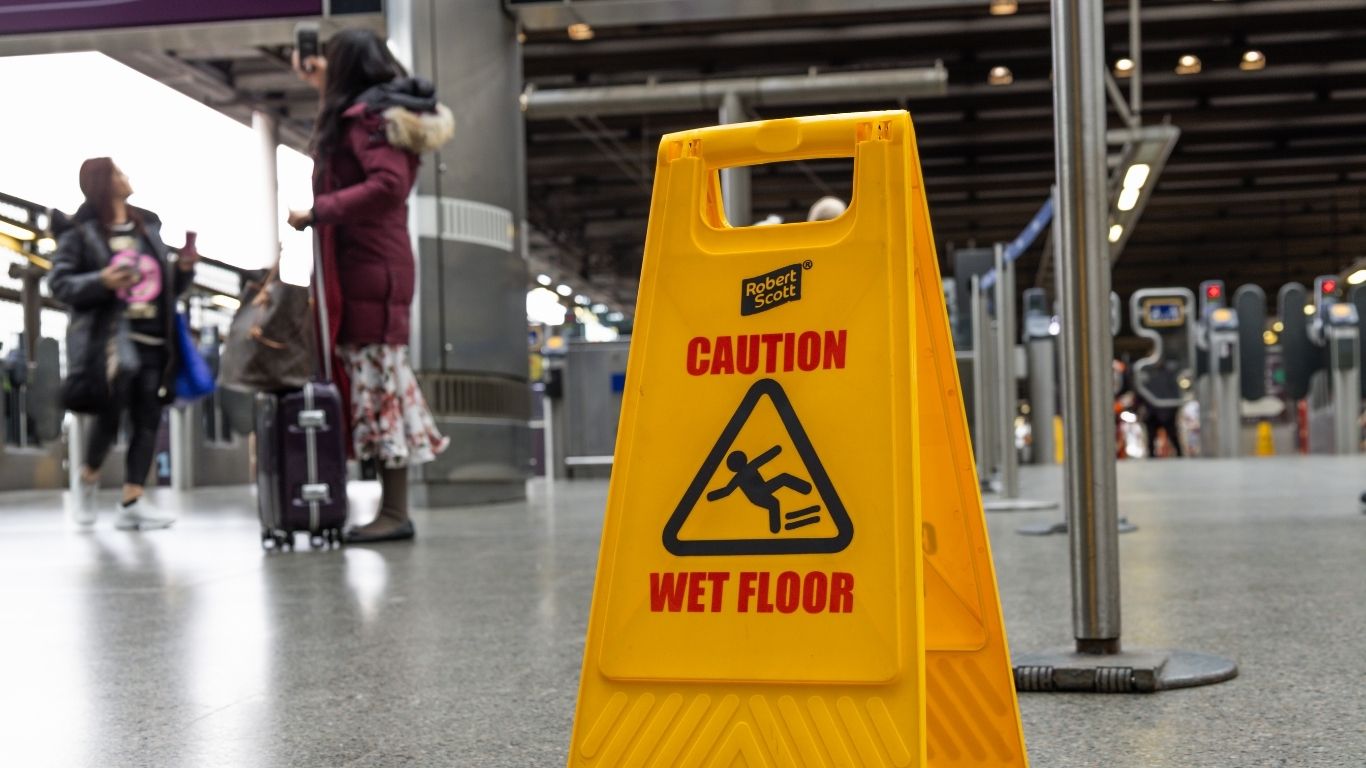

To prove a slip and fall case, you must show a property owner knew about a hazard, or should have known, and failed to fix it. Falls are the leading cause of nonfatal injuries treated in U.S. emergency rooms, according to the Centers for Disease Control and Prevention (CDC).
What You Need to Prove in a Slip and Fall Case
A slip and fall claim is a type of premises liability case. To win, you must prove four basic things, and all four elements must be present. If you miss even one element, you could risk your case. For example, if you fell without an injury, then you can’t recover damages.
| Element | What It Means |
|---|---|
| Duty | The owner owed you a duty to keep the property reasonably safe |
| Breach | The owner failed that duty by allowing a hazard |
| Causation | The hazard actually caused your fall and injury |
| Damages | You suffered real harm, like medical bills or lost wages |
In a slip and fall case, the hardest element to prove is usually breach. This is the part that proves the owner failed to act. That is where the idea of “notice” comes in, and it is the heart of most slip and fall cases.
Why “Notice” is Key to a Slip and Fall Case
To prove the owner breached their duty, you usually must show they had “notice” of the hazard. This is the single most important issue in most slip and fall cases.
Actual Notice
The owner or an employee actually knew about the hazard, like a spill someone reported
Constructive Notice
The hazard was there long enough that a careful owner should have found and fixed it
Created the Hazard
The owner or an employee caused it themselves, such as mopping without a warning sign
Constructive notice often comes down to time. The longer a hazard existed, the stronger your case.
What if the owner didn’t know, and had no reasonable way to know, about the hazard? Then, they typically can’t be held liable. Proving notice is often what makes or breaks a claim.
The Evidence You Need to Prove a Slip and Fall
Strong evidence is what turns your story into a winning claim. Hazards are cleaned up, and memories fade. After a slip and fall, you must gather proof as quickly as possible.
Helpful evidence includes:
- Photos and videos of the hazard, taken right away
- The store or property’s incident report
- Names and statements from witnesses
- Surveillance footage, which can be erased in days
- Your medical records tying injuries to the fall
- Cleaning and maintenance logs, obtained through your attorney
Surveillance video is often deleted within days or weeks. That is why the steps you take early matter so much. Our guide on what to do after a slip and fall accident walks you through them. An experienced slip and fall attorney can also send a legal notice to preserve footage before it disappears.
What is the Property Owner’s Duty, and Can They Blame You?
A property owner’s duty depends on why you were there. Unfortunately, owners will try to shift the blame onto you regularly. But their duty depends on your status.
- Property owners owe invitees the highest duty. The owner must inspect for, and fix or warn of, potential hazards
- Licensees, like social guests, are owed a duty to warn of known dangers
- Trespassers are generally owed the least protection
Owners and insurers often claim the hazard was “open and obvious” or that you were not watching where you walked. This matters in states like Alabama, which follows contributory negligence. Unfortunately, even being 1% at fault could bar your recovery entirely.
These claims fall under premises liability law, and deadlines apply. In Alabama, most injury claims must be filed within two years under Ala. Code § 6-2-38.
Frequently Asked Questions About Proving a Slip and Fall Case
How do you prove a slip and fall case?
To prove a slip and fall case, you must show four things. First, the property owner owed you a duty of care, and they breached it by allowing a hazard. Then, the hazard must have caused your fall, and you suffered real harm. Finally, you must prove that the owner knew, or should have known, about the danger and failed to fix it.
What is notice in a slip and fall case?
Notice means the property owner knew, or should have known, about the hazard that caused your fall. There are two types of notice in slip and fall cases. The first is actual notice, where the owner truly knew about the danger. The second is constructive notice, where the hazard existed long enough that a careful owner should have found it.
What evidence do you need for a slip and fall lawsuit?
Useful evidence for a slip and fall lawsuit includes visual documentation, the incident report, surveillance footage, and your medical records. Cleaning and maintenance logs may also show whether or not the owner ignored the hazard. Ultimately, evidence disappears quickly, so you should reach out to an attorney as soon as possible.
Can I still win if I was partly at fault?
Your chances of winning a claim depend on where you live. For example, in states that follow comparative negligence, you may still recover, even if you were partly at fault. But some states, like Alabama, follow strict contributory negligence.
How long do I have to file a slip and fall lawsuit?
The deadline depends on your state. In Alabama, most slip and fall claims must be filed within two years of the injury. Missing the deadline usually means losing your right to sue. Because evidence like surveillance video and witness memories fade quickly, it is best to act as soon as possible.
Trust Alexander Shunnarah Trial Attorneys Today
Property owners and their insurers have teams working to deny slip and fall claims. You deserve someone fighting just as hard for you. Our firm knows how to prove notice, gather evidence fast, and hold negligent owners accountable. Schedule a free case review today.
Reviewed by Alexander Shunnarah, Attorney and Chief Executive Officer at Alexander Shunnarah Trial Attorneys, on 2026-08-24.