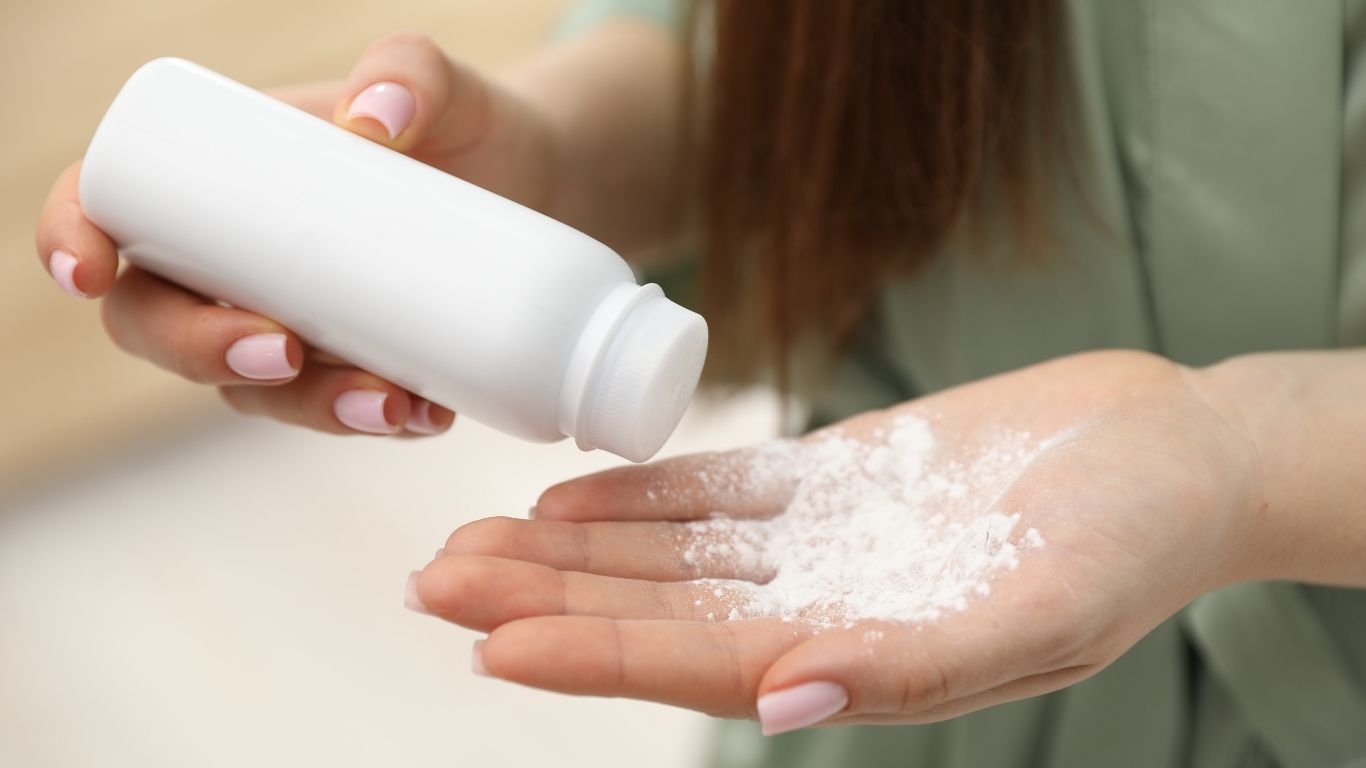

As of late 2026, the talcum powder lawsuit is active and moving forward. Currently, federal courts face more than 69,000 pending cases. Johnson & Johnson has proposed a $5.5 billion settlement for ovarian cancer claims.
Understanding the Links Between Talcum Powder and Cancer
Each lawsuit emphasizes that talcum products are unsafe because talcum allegedly causes mesothelioma and ovarian cancer. These health risks are the heart of every baby powder cancer lawsuit.
Asbestos and Mesothelioma
Talcum powder and asbestos may form near each other in the ground. As a result, contaminated talcum may cause mesothelioma, a serious cancer. The FDA found asbestos in some J&J talc samples between 2019 and 2020.
Talc and Ovarian Cancer
For years, countless women have used talcum baby powder for personal hygiene. Studies have linked this long-term use to ovarian cancer.
After the FDA findings, J&J stopped selling its talc-based baby powder in the U.S. and switched to a cornstarch formula.
Who Qualifies for a Talcum Powder Lawsuit?
Even if you’ve used talcum powder in the past, you may not have a claim. A cancer diagnosis, like mesothelioma or ovarian cancer, is key to a possible claim. You may qualify for a talcum powder lawsuit if you meet the following requirements:
- You used talcum products like Johnson’s Baby Powder
- You used these talcum products regularly, often for years
- You later received a diagnosis of ovarian cancer or mesothelioma
Two Paths for Justice
One is for women who developed talcum-linked ovarian cancer after long-term use. The other is for people who developed mesothelioma from asbestos in the talc. This can even include secondhand exposure, such as a family member who breathed in the powder.
Are you unsure if you qualify? That’s normal. Fortunately, you don’t have to figure it out alone. An attorney can review your product use and your diagnosis to see if you have a case.
What to Expect From a Mesothelioma or Talc Ovarian Cancer Lawsuit
Whether you’re suffering from mesothelioma or ovarian cancer, a talcum powder case is complicated. For example, verdicts and settlements vary. Your potential recovery depends on your diagnosis, your use, and your evidence.
Plus, every state sets a filing deadline. In Alabama, you generally have two years under Ala. Code § 6-2-38, and for a disease that appears late, the clock may start at diagnosis. Our guide on dangerous household products further explains how these claims work.
Common Questions About the Talcum Powder Lawsuit
Are talcum powder lawsuits still active in 2026?
Yes, talcum powder lawsuits are still active in 2026. As of late 2026, more than 69,000 cases against Johnson & Johnson are pending in federal court. New claims continue to be filed. People with a qualifying diagnosis may still be able to join.
Who qualifies for a talcum powder lawsuit?
You may qualify for a talcum powder lawsuit if you meet certain requirements. First, you must have used talcum products like Johnson’s Baby Powder. Then, you must be diagnosed with ovarian cancer or mesothelioma as a result. An attorney can review your product use and diagnosis to confirm whether you qualify.
Does talcum powder cause cancer?
Research has linked talcum powder to cancer in two ways. Talc contaminated with asbestos can cause mesothelioma, and the FDA found asbestos in some talc samples. Long-term genital use of talc powder has also been linked to ovarian cancer. The International Agency for Research on Cancer lists talc that contains asbestos as a known human carcinogen.
What is the average talcum powder settlement?
There is no reliable average talcum powder settlement, because every case is different. Your potential compensation depends on your diagnosis, how you used the product, and your evidence. An attorney can give you a better estimate.
Trust Alexander Shunnarah Trial Attorneys Today
Thousands of families have been affected by talc-linked cancer, and the fight for accountability is far from over. If you were diagnosed with ovarian cancer or mesothelioma after using talcum powder, you may have a claim. We handle these complex cases with care. Schedule a free case review today.
Reviewed by Alexander Shunnarah, Attorney and Chief Executive Officer at Alexander Shunnarah Trial Attorneys, on 2026-11-05.