
Premises liability is a legal concept. It holds property owners responsible for injuries caused by unsafe conditions on their property. According to the Centers for Disease Control and Prevention, workplace falls cost $70 billion annually. By understanding what premises liability, especially in Alabama, is, you know your rights better.
Understanding the Legal Elements of a Premises Liability Claim
To win a premises liability case in Alabama, an injured person generally must prove four things.
- Duty, or the property owner owed you a legal duty of care. The specific duty depends on your status as a visitor.
- Breach, or the property owner failed to meet that duty. This usually means that they allowed a dangerous condition to exist, or didn’t warn others about it.
- Causation, or the breach directly caused your injury.
- Damages, or you suffered real harm, like medical bills, lost wages, pain and suffering, and other losses.
What “Reasonable Care” Means
Property owners must exercise reasonable care in maintaining their property. Responsibilities include inspecting for hazards and fixing dangerous conditions in a timely way. They must also warn visitors about known dangers that cannot be immediately fixed.
Notice Requirements
Property owners must have either actual notice of a hazard or constructive notice. The former means they knew about it. The latter means that it should’ve been known through reasonable inspection. Without notice, holding an owner liable is difficult.
Our premises liability team investigates each element in Alabama cases we handle.
How Alabama Categorizes Property Visitors
Alabama still uses the traditional common-law categories of visitors. Your status when injured directly affects the property owner’s duty toward you.
Visitor Categories Under Alabama Law
| Visitor Type | Duty Owed | Common Examples |
|---|---|---|
| Invitee | Highest duty. Reasonable care to keep property safe and inspect for hazards | Customers in stores, restaurant patrons, hotel guests, tenants in common areas |
| Licensee | Medium duty. Warn about known hidden dangers | Social guests, friends visiting the home, door-to-door salespeople |
| Trespasser | Lowest duty. Only avoid willful or wanton injury | People on property without permission (with limited exceptions for children) |
Attractive Nuisance Doctrine
Alabama recognizes the attractive nuisance doctrine for child trespassers. Property owners must take extra care if they have unsafe conditions that could attract children. These conditions include pools, building sites, and abandoned equipment. They owe children a higher duty of care.
This duty can apply even if the children were trespassing.
Why Category Matters
A customer who slips on a wet grocery store floor (invitee) has stronger legal protections. However, a social guest who slips on the same floor in a private home (licensee) has less protection. Understanding your status is essential to evaluating your case.
Common Examples of Premises Liability Cases
Premises liability law covers many types of injuries. After more than 20 years in business, these are the most common premises liability examples we’ve seen.
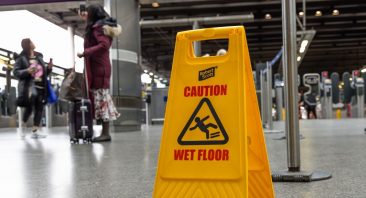
- Slip and fall accidents on wet floors, ice, or freshly mopped surfaces without warning signs.
- Trip and fall accidents on uneven walkways, torn carpeting, or broken steps.
- Assaults, robberies, or other criminal attacks on premises with inadequate security.
- Swimming pool injuries, like drownings, chemical injuries, or slip and falls on pool decks.
- Falling objects, including merchandise falling from store shelves, or unsecured objects on construction sites.
- Elevator and escalator accidents due to mechanical failures or maintenance issues.
- Structural failures. Collapsed decks, broken railings, damaged staircases.
- Toxic exposure, like mold, lead paint, chemical exposure, or gas leaks.
- Building code violations. Examples include missing handrails, non-compliant construction, and fire hazards.
For a common example, see our article on what to do after a slip and fall accident. If your injury involves a slip and fall specifically, our slip and fall team handles these cases directly.
Alabama Recreational Use Statute
Under Ala. Code § 35-15-1 et seq., property owners who allow public recreational use of their land generally have reduced liability. This affects claims involving hunting, fishing, hiking, and other outdoor activities on private property. But they may still be held responsible.
When Can You Sue a Property Owner in Alabama?
Alabama law uses specific requirements and limits on premises liability lawsuits. These include the statute of limitations, pure contributory negligence, and potential damages.
Statute of Limitations
Under Ala. Code § 6-2-38(l), you have 2 years from the date of injury to file a personal injury lawsuit. Missing this deadline almost always bars the claim entirely.
Pure Contributory Negligence
Alabama is one of only a few states that follow pure contributory negligence. Under this rule, if you are found even 1% at fault for your own injury, you cannot recover any damages. Insurance companies aggressively raise this defense in premises liability cases.
Open and Obvious Doctrine
Alabama courts often deny recovery when the hazard was “open and obvious”. This means that a reasonable person should have seen and avoided it.
Damages You Can Recover
Successful Alabama premises liability claims can recover a variety of damages. It depends on the specifics of your case.
- Medical expenses (past and future)
- Lost wages and lost earning capacity
- Pain and suffering
- Emotional distress
- Loss of enjoyment of life
- In wrongful death cases, but only punitive damages under Ala. Code § 6-5-410
Common Questions About Premises Liability
What is premises liability in simple terms?
The premises liability definition is: the legal responsibility of property owners to keep their property reasonably safe for visitors. Otherwise, someone may get hurt, especially when a property owner does not fix or warn about a dangerous condition. If that happens, the injured person may have a valid legal claim for damages.
What is premises liability under Alabama law specifically?
Alabama follows traditional common-law premises liability rules with strict defenses. Visitors are classified as invitees, licensees, or trespassers. Property owners owe different duties to each.
Alabama’s pure contributory negligence rule and the state’s “open and obvious” doctrine make these cases harder to win. But not impossible.
Who can be held liable in a premises liability case?
Potentially liable parties include property owners, property managers, tenants of leased space, landlords, contractors, and security companies. Multiple defendants often share liability in a single case.
What is the deadline to file a premises liability lawsuit in Alabama?
Alabama’s general personal injury statute of limitations is 2 years under Ala. Code § 6-2-38(l). Claims against government entities have shorter deadlines. These periods can range from 6 months to 1 year. Missing any applicable deadline usually bars the claim entirely.
How does contributory negligence affect premises liability cases in Alabama?
Alabama’s pure contributory negligence rule bars recovery if the injured person is even 1% at fault. Insurance companies often argue that the victim should have noticed the hazard, was distracted, or helped cause the injury. This defense is one of the biggest challenges in Alabama premises liability cases.
What damages can I recover in a premises liability case?
Damages may include medical expenses, lost wages, pain and suffering, emotional distress, and loss of enjoyment of life. In wrongful death cases, Alabama uniquely limits recovery to punitive damages under Ala. Code § 6-5-410.
Do I need a lawyer for a premises liability case?
Alabama’s strict defenses, like pure contributory negligence and short deadlines, make experienced legal representation especially important. An attorney can preserve evidence, counter insurer defenses, and identify all liable parties.
Trust Alexander Shunnarah Trial Attorneys Today
Alabama premises liability cases involve strict defenses, short deadlines, and aggressive insurers. Our Birmingham-based trial team has handled premises liability cases across Alabama for more than 20 years. Schedule a free case review today.
Reviewed by Alexander Shunnarah, Attorney and Chief Executive Officer at Alexander Shunnarah Trial Attorneys on 2026-07-09.