
Determining fault in e-bike accident injuries depends on who acted carelessly. Responsibility could fall on the driver, the rider, or even the manufacturer. According to the U.S. Consumer Product Safety Commission (CPSC), e-bikes accounted for 310 of 533 micromobility deaths from 2017 to 2024.
Who Can Be at Fault in an E-Bike Accident?
Figuring out who is legally responsible for an e-bike crash takes a closer look. Often, more than one party shares e-bike crash liability.
| Who | How They May Be at Fault |
|---|---|
| A driver | Turning into a rider, opening a door, or failing to yield |
| The e-bike rider | Running a light, riding against traffic, or speeding |
| The e-bike maker | A defective battery, brakes, or motor |
| A government agency | A dangerous pothole or a poorly designed road |
Unfortunately, many serious e-bike crashes involve a car or truck. The CPSC found that motor-vehicle collisions are a hazard in fatal e-bike accidents. When a careless driver hits a rider, that driver’s insurance is often the first place to look for compensation.
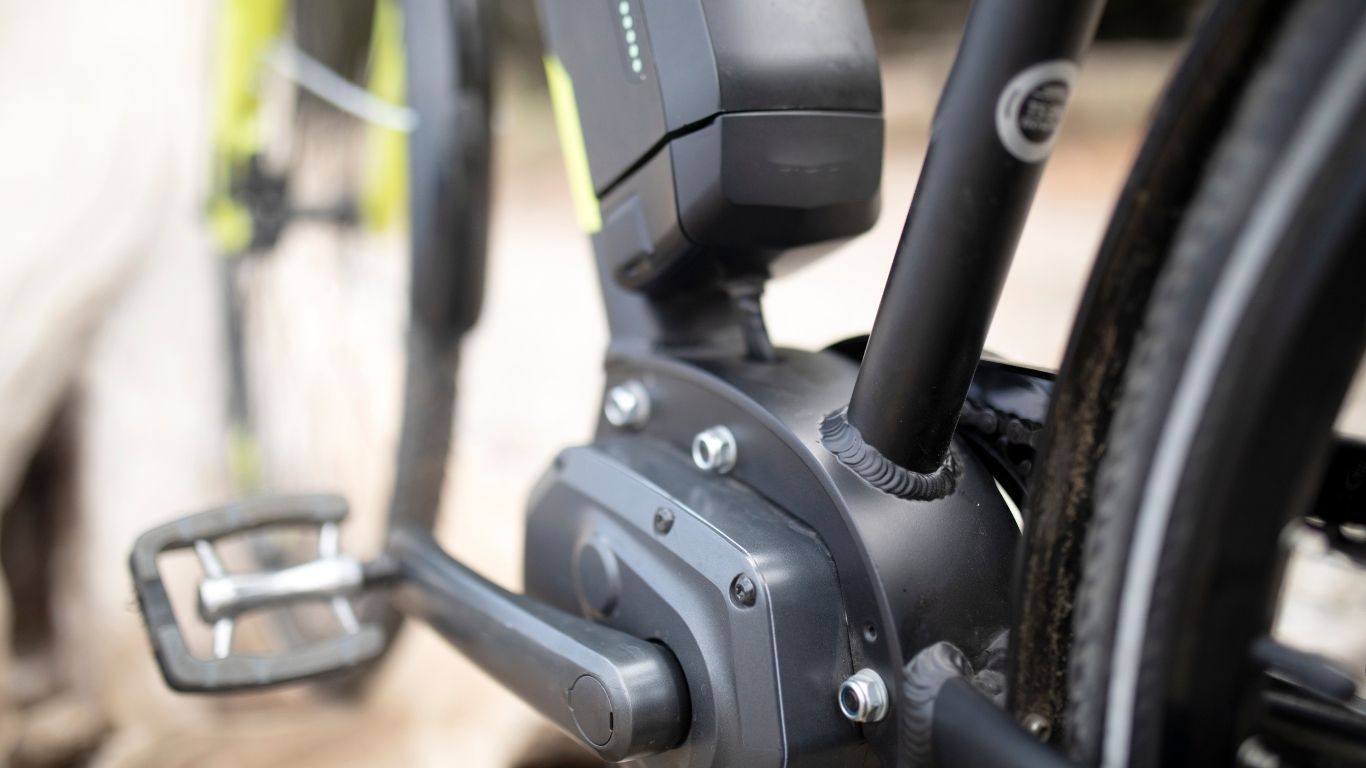
But sometimes the danger is the e-bike itself. Faulty lithium-ion batteries have caused fires and sudden failures. In those cases, the manufacturer may be liable. If you were hurt on an e-bike, our e-bike accident attorneys can help identify every party at fault.
How Do E-Bike Classes Affect Fault?
Whether you were following the law when the crash happened can strongly affect your claim. E-bikes are sorted into three classes. Each class has its own rules.
| Class | How the Motor Works | Top Assisted Speed |
|---|---|---|
| Class 1 | Assists only while pedaling | 20 mph |
| Class 2 | Throttle; works without pedaling | 20 mph |
| Class 3 | Assists only while pedaling | 28 mph |
All three classes use a motor under 750 watts. Alabama defines them in Ala. Code § 32-1-1.1. Then, Ala. Code § 32-5A-267 sets the riding rules. If you broke a rule tied to your e-bike class, the other side may argue you share the blame.
- Riding on a sidewalk is banned statewide
- Class 3 riders must wear a helmet and must be at least 16 years old
- Changing your bike’s speed beyond its class label can make it illegal
A modified or misused e-bike can shift some fault onto the rider. In some states, an adjusted e-bike can reduce or even erase your recovery.
How Does Your State’s Negligence Rule Affect Your Claim?
Even if the other side was mostly at fault, your own share of blame can matter a great deal. It all depends on the negligence rule in your state. Most states use “comparative negligence,” which reduces your payout by your percentage of fault. If you were 20% at fault, you lose 20% of your award but still recover the rest.
However, Alabama works differently. Alabama is one of only a few states that still follow “pure contributory negligence.” If you’re found even 1% at fault, you may be barred from recovering anything at all.
Alabama riders, take note: being just 1% at fault in an e-bike accident can cost you your entire claim.
This is why insurance companies fight so hard to pin part of the blame on riders. A small admission, like saying you were going a little too fast, could deny your claim entirely. In a contributory negligence state, hiring an attorney is critical to protecting your side of the story.
What Can You Recover After an E-Bike Accident?
Do you believe that someone else caused your e-bike accident injuries? The other side may owe you compensation that covers more than medical bills. In an electric bike accident lawsuit, you may suffer damages including:
- Medical bills, current and future
- Lost wages and lost earning ability
- Pain and suffering
- Property damage to your e-bike
- Long-term care for serious injuries
Many different factors affect the value of your claim. We’ve built winning cases based on severe injuries, clear fault, and available insurance. Our article on 5 signs your personal injury claim could be worth more explains what can push a claim’s value higher.
Every state limits how long you have to file. In Alabama, you generally have two years from the date of the crash under Ala. Code § 6-2-38. Evidence like video, witness memories, and the e-bike itself can disappear fast, so acting quickly protects your claim.
Common Questions About E-Bike Accidents
Who is at fault in an e-bike accident?
In an e-bike accident, determining fault depends on different factors. For example, a driver may be at fail to yield, turning into a rider. In some cases, the e-bike manufacturer is liable for a defect. The best thing you can do is to meet with an attorney.
Can I sue for e-bike accident injuries?
Potentially, yes, you could sue. If you were hurt by someone else’s negligence, you could file a claim or lawsuit to recover damages. This may be against a driver, the e-bike manufacturer, or another party. Your ability to recover largely depends on your state’s negligence rule.
Does e-bike insurance cover accidents?
Usually not through auto insurance. Most states, including Alabama, do not require insurance to ride a legal e-bike. Compensation could come from the at-fault driver’s auto insurance, a homeowner’s policy, or a product liability claim. An attorney could help you review all possible sources for compensation.
Can I recover if I wasn’t wearing a helmet?
In Alabama, adult riders on Class 1 and Class 2 e-bikes are not required to wear helmets. However, Class 3 riders must wear a helmet. Not wearing a helmet does not automatically bar your claim, but the other side may argue it added to your injuries. That is a real risk in Alabama’s contributory negligence system.
How long do I have to file an e-bike accident claim?
The deadline depends on your state. In Alabama, you generally have two years from the date of the crash to file. Some claims, such as those against a government agency, can carry much shorter notice deadlines. Because evidence fades quickly, it is best to act as soon as possible.
Trust Alexander Shunnarah Trial Attorneys Today
E-bike cases are still new to many courts, and insurance companies use that uncertainty to shift blame onto riders. Our firm knows how to prove fault, protect your rights, and stand up for injured riders across the country. Schedule a free case review today.
Reviewed by Alexander Shunnarah, Attorney and Chief Executive Officer at Alexander Shunnarah Trial Attorneys on 2026-07-17.