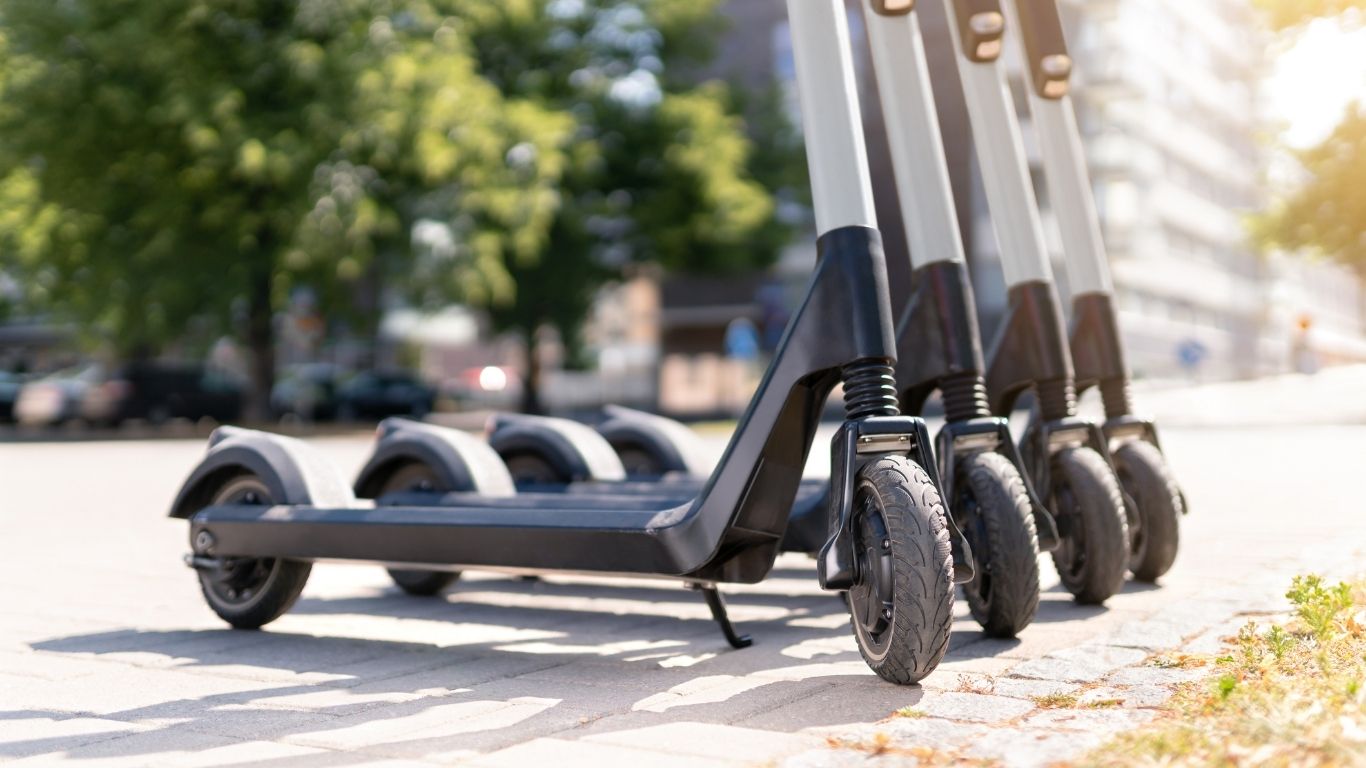

E-scooter accident liability depends on what caused the crash. Responsible parties could include the rider, a careless driver, the scooter company, or a dangerous road. E-scooter injuries have surged with the rise of apps like Lime, Bird, and Spin. The Consumer Product Safety Commission (CPSC) recorded at least 117,600 e-scooter emergency room visits between 2017 and 2021.
Who Can Be Liable in an Electric Scooter Accident Lawsuit
Determining liability in an e-scooter accident may be difficult. Often, more than one party shares the blame, which is why e-scooter accident liability can be complicated.
- The scooter rider, especially if reckless riding hurt a pedestrian or another person
- A negligent driver, like a car striking a scooter rider
- The scooter company, such as Lime, Bird, or Spin, for a poorly maintained scooter
- The manufacturer for a defective scooter design or part
- A city or government for dangerous road conditions like potholes
Finding every responsible party is key to full recovery. With injuries this serious, identifying who is at fault and who can pay makes a real difference.
How Do Lime, Bird, and Spin User Agreements Affect Your Claim?
Before you can ride, you must tap “I agree” to a long user agreement. Most riders never read it, but it can shape your entire case. What these agreements include:
- Liability waivers that try to release the company from responsibility
- Arbitration clauses that force disputes out of court and into private arbitration
- Class-action waivers that stop group lawsuits
But a waiver isn’t the end of your case. These clauses mainly limit claims against the scooter company. However, they generally don’t block a claim against a careless driver who hit you. Some courts are unsure whether these “tap to agree” waivers are even enforceable.
If you were hurt, our e-scooter accident attorneys can review the fine print and find every available path to recovery.
What If Insurance Won’t Cover an E-Scooter Rider Crash?
One of the biggest challenges in an e-scooter case is insurance. Coverage gaps often leave riders unsure where to turn.
- Scooter companies usually carry limited insurance, often only for people the rider hits, not the rider
- Standard auto insurance does not cover e-scooters
- Health insurance may pay medical bills, but not pain and suffering or lost wages
If a car hit you, the driver’s auto insurance is often the main source of recovery. Your own uninsured or underinsured motorist coverage may also apply if the driver had little or no insurance. Sorting out these overlapping policies is one of the hardest parts of an e-scooter case. But it’s also where an attorney can help the most.
What Should You Do After an E-Scooter Crash?
E-scooter cases often depend on evidence that disappears fast. So, the steps you take after a crash can protect both your health and your claim.
- Get medical care right away, even for minor symptoms
- Take photos of the scooter, the scene, and your injuries
- Write down the scooter’s ID number and the app you used
- Get the names and contact information of any drivers and witnesses
Insurers may argue you were at fault; for example, you may not have worn a helmet. This is a serious risk in states like Alabama, which follows contributory negligence. If you’re found even 1% at fault for the accident, you’re unlikely to recover anything at all.
In Alabama, you must file most injury claims within two years under Ala. Code § 6-2-38. Our guide on e-scooter accident lawsuits explains the process in more detail.
Frequently Asked Questions About E-Scooter Accident Liability
Who is liable in an e-scooter accident?
E-scooter accident liability depends on what caused the crash. For example, a distracted driver may hit a rider, or the scooter company may fail to maintain its equipment properly. The rider may share blame too. Often, more than one party is liable, so a full investigation matters.
Can I sue Lime, Bird, or Spin after a crash?
Possibly. You may be able to sue Lime, Bird, or Spin if their negligence directly caused your injury. However, their user agreements include arbitration clauses and liability waivers, making these claims harder. The best thing you can do is to meet with an attorney to learn your options.
What if a car hit me while I was on an e-scooter?
If a car hit you while riding an e-scooter, the standard rules of negligence usually apply. The at-fault driver’s auto insurance may cover your injuries. Your own uninsured or underinsured motorist coverage might also apply. Basically, the scooter company’s user agreement doesn’t protect the driver who hit you.
Does insurance cover e-scooter accidents?
It depends on the situation. For example, scooter rental companies usually carry limited insurance. Plus, standard auto policies do not cover e-scooters. The best thing you can do is to review all available policies with a personal injury lawyer.
How long do I have to file an e-scooter accident lawsuit?
In Alabama, most e-scooter accident claims must be filed within two years of the injury. Claims against a city or government may have much shorter deadlines and special notice rules. The best thing you can do is to act as quickly as possible, especially because evidence disappears quickly.
Trust Alexander Shunnarah Trial Attorneys Today
E-scooter cases are full of obstacles, including user agreements, insurance gaps, and multiple at-fault parties. You should not have to untangle them alone. Our firm knows how to identify every liable party and fight for the compensation you deserve. Schedule a free case review today.
Reviewed by Alexander Shunnarah, Attorney and Chief Executive Officer at Alexander Shunnarah Trial Attorneys, on 2026-09-08.